
Forehead Lines
Repeated eyebrow elevation can create horizontal forehead lines. Botox can temporarily reduce the muscle activity responsible for these lines when treatment is appropriate.
Consultation-Led Botox in Turnersville & Salem County, NJ
Smooth expression lines with a treatment plan built around your facial anatomy, goals, and comfort. Mediversity Health provides Botox treatment at its Turnersville and Salem County, New Jersey locations, serving patients throughout South Jersey and nearby communities. Every appointment begins with a consultation so your provider can determine whether Botox is appropriate, which areas may benefit, and what level of treatment fits your goals.
Consultation-led Botox
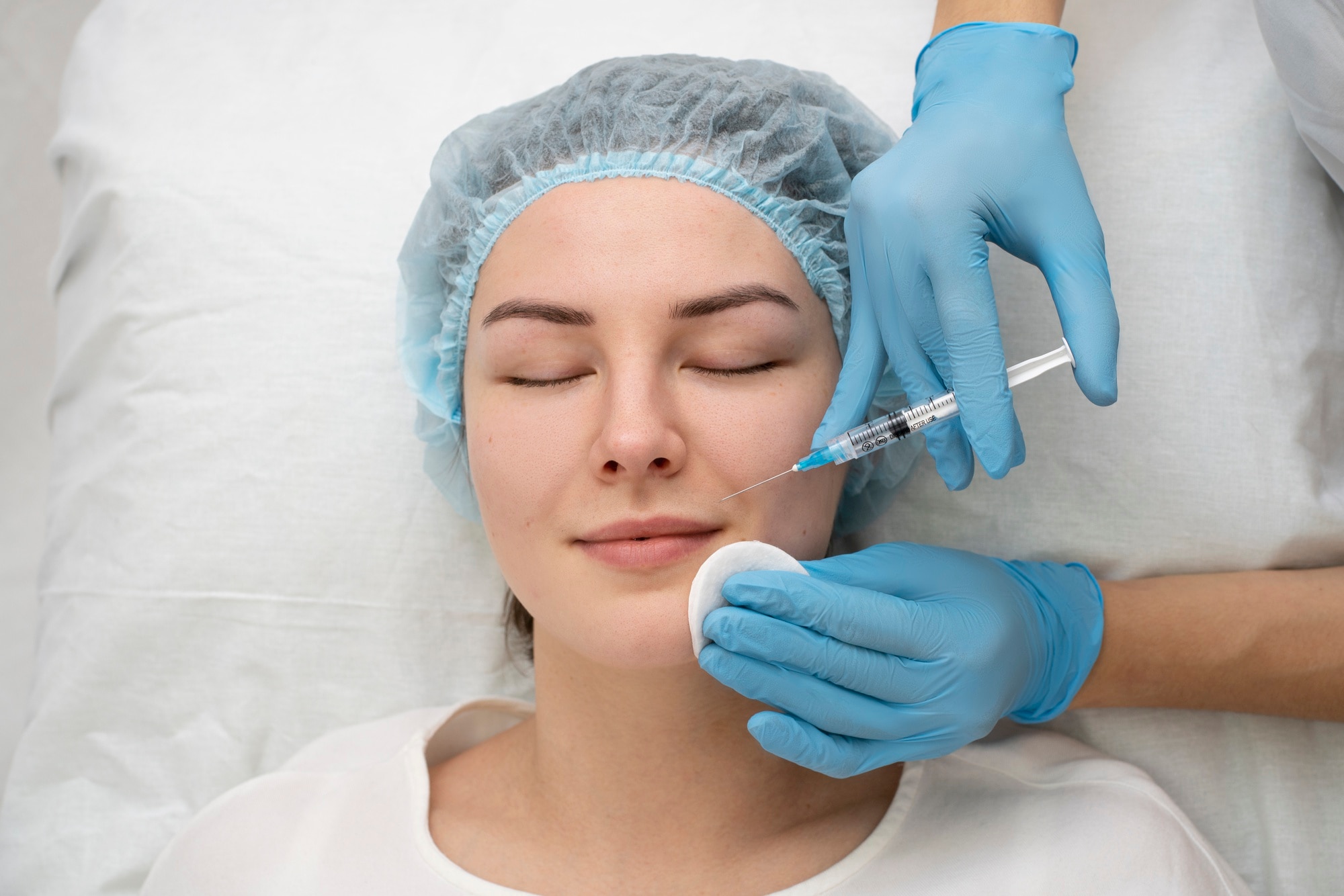
Soften unwanted expression lines while preserving a natural appearance and normal facial expression.
Botox Cosmetic, also known as onabotulinumtoxinA, is an injectable prescription treatment that temporarily reduces activity in selected muscles. When those muscles contract less strongly, certain dynamic facial lines can appear softer.
The FDA currently approves BOTOX Cosmetic in adults for the temporary improvement of moderate to severe frown lines between the eyebrows, crow’s feet, forehead lines, and vertical platysma bands connecting the jaw and neck.
Unlike a dermal filler, Botox does not add volume to the skin. It works primarily by reducing targeted muscle activity. That distinction matters when deciding whether Botox, filler, or another aesthetic treatment better matches your concern.
At Mediversity, the goal is not to remove every facial movement. A thoughtful treatment plan aims to soften unwanted lines while preserving a natural appearance and normal facial expression. Botox is one part of the wider Mediversity Aesthetics program, delivered by our licensed medical team.
Botox is most useful for concerns related to repetitive muscle movement. Common treatment areas include the following — for concerns caused by volume loss instead, see dermal fillers.
Repeated eyebrow elevation can create horizontal forehead lines. Botox can temporarily reduce the muscle activity responsible for these lines when treatment is appropriate.
Often called the “11 lines,” these vertical lines become more pronounced when you frown or concentrate. Botox can relax the muscles responsible for this expression.
Lines around the outer corners of the eyes, especially while smiling or squinting. BOTOX Cosmetic is FDA-approved for moderate to severe lateral canthal lines in adults.
BOTOX Cosmetic is also FDA-approved for moderate to severe vertical platysma bands connecting the neck and jaw in adults, a different area from forehead, frown-line, and crow’s-feet treatment.
Small amounts of botulinum toxin around the upper lip relax selected muscles so the lip rotates or “flips” slightly outward and appears fuller, without adding filler volume. Learn more below.
Your provider assesses how your facial muscles move and recommends only the areas that match your goals.
Book a Botox consultationA lip flip is different from lip filler. It changes the position and movement of the lip rather than injecting a gel to add volume. The FDA’s listed cosmetic indications for BOTOX Cosmetic do not include lip flip treatment, so patients should ask their provider specifically about the intended use, expected benefits, and risks. Compare options in our lip filler guide.
Your appointment should not begin with an automatic injection. It should begin with an assessment.
At Mediversity, the treatment process is designed around consultation, personalized planning, treatment, and aftercare. Appointments are available at our Turnersville office and Salem County office.
Your provider reviews your aesthetic goals, relevant medical history, medications, previous injectable treatments, and the areas you would like to improve. They can also assess how your facial muscles move. This is important because Botox is not simply placed wherever a line is visible — injection sites and dosing should be considered in the context of facial anatomy and muscle activity.
Your provider determines whether Botox is appropriate and discusses the treatment areas, expected degree of improvement, timing, and practical considerations such as maintenance. There is no single Botox dose that works for every face. The amount used can vary based on the treatment area, muscle activity, anatomy, and desired outcome.
A very fine needle is used to place small amounts of Botox into selected muscles. The process is generally brief — Botox sessions take approximately 15 to 20 minutes, while a first-time patient visit may take longer once consultation and aftercare are included.
You leave with instructions about protecting the treated area and what changes to expect as the treatment takes effect. Because results develop gradually, a follow-up assessment can be useful when your provider wants to evaluate the response before deciding whether any adjustment is appropriate.
First-time patients often have the same basic questions: Will it hurt? Will I look frozen? How long will it last? What should I avoid afterward?
The FDA labeling lists hypersensitivity to botulinum toxin or its components and infection at the proposed injection site as contraindications. It also warns that people with certain neuromuscular disorders or pre-existing swallowing or breathing problems may have increased risk of clinically significant effects.
The FDA label also states that there are no adequate human data establishing the developmental risk of BOTOX Cosmetic during pregnancy. That makes pregnancy an important issue to discuss with your provider before cosmetic treatment.
Read our full guide: First-time Botox: what to expect before, during, and after.
Botox does not produce its full effect the moment you leave the office.
Some people begin noticing changes within several days. Results typically begin to appear during the first few days, while the full effect may take longer to assess.
That difference is important: early improvement and final assessment are not necessarily the same thing.
Most people can return to everyday activities immediately after treatment, although aftercare instructions should be followed carefully. See aftercare guidance below and our first-time Botox guide.
These effects are usually temporary. Contact your provider if anything worsens or concerns you.
When searching for Botox before and after results, remember that photographs are only useful when the comparison is meaningful.
A relaxed face can look substantially different from a fully animated face. For wrinkle treatment, before-and-after comparisons are often more informative when the same movement is shown before treatment and at a consistent follow-up point.
Official BOTOX Cosmetic before-and-after examples commonly compare photographs taken before treatment with results at a later follow-up point. Individual results vary.
At Mediversity, the objective should be an outcome that makes sense for your individual facial structure rather than attempting to reproduce someone else’s result. For local patient perspectives, read our Turnersville, NJ guide to Botox and fuller lips.
One of the most common questions is how long does Botox last?
For cosmetic treatment of facial lines, the effect generally lasts about 3 to 4 months, and sometimes longer. The actual duration varies between patients.
Factors can include the area treated, muscle activity, dose, individual response, and whether you have previously received treatment.
Repeat treatment should be planned with your provider rather than automatically repeated at very short intervals. More detail: How long does Botox last?
Botox is temporary.
As its effect decreases, the treated muscles gradually regain activity. The lines that were softened can become more visible again over time. This is different from saying that Botox suddenly disappears and causes a special rebound aging effect.
With repeated treatment, treated muscles may become thinner and the effects may sometimes last longer. Individual outcomes vary.
Typical duration for cosmetic treatment of facial lines — sometimes longer. Results vary between patients.
Yes. Botox treatment is not a permanent commitment. Patients can choose not to continue. As the treatment effect wears off, facial movement gradually returns.
There is no single age that is right for everyone. The more useful question is whether the treatment matches your facial anatomy, goals, expectations, and health history.
Some adults seek treatment after expression lines become noticeable. Others are interested in a subtle approach before lines become more established. Botox is not a replacement for good skincare, sun protection, or treatment of changes caused by volume loss and skin texture. Age by itself should not determine the treatment plan.
Dysport vs Botox is a common comparison because both are botulinum toxin type A products used for aesthetic treatment. BOTOX Cosmetic contains onabotulinumtoxinA. Dysport contains abobotulinumtoxinA. They work through related mechanisms, but they are different commercial products with product-specific potency measurements.
The FDA states that the units for BOTOX Cosmetic cannot be converted to or treated as equivalent to units of other botulinum toxin products. Dysport’s FDA materials similarly state that its units are not interchangeable with other botulinum toxin products.
That means a statement such as “20 units of one product equals 20 units of another” can be misleading.
| Product | Active ingredient | Product category | Units interchangeable with other toxin brands? | FDA cosmetic indications |
|---|---|---|---|---|
| Botox | OnabotulinumtoxinA | Botulinum toxin type A | No | Multiple adult facial indications, including frown lines, crow’s feet, forehead lines and platysma bands |
| Dysport | AbobotulinumtoxinA | Botulinum toxin type A | No | Includes glabellar lines among its FDA-approved indications |
Your provider can explain which product is being used and why. Read more: Botox vs. Dysport — which is right for you?
The same principle applies to Xeomin vs Botox.
Xeomin contains incobotulinumtoxinA, while Botox Cosmetic contains onabotulinumtoxinA. Their dosing units are not interchangeable because their potency is established using product-specific assays.
Patients should therefore compare the treatment plan, not simply the number of units quoted by different providers.
The specific product matters, but injection technique, facial anatomy, treatment goals, and appropriate dosing also matter.
Botox and dermal fillers solve different problems.
For example, forehead expression lines may be appropriate for Botox, while a loss of lip volume may be better addressed with a lip filler. Learn how fillers work in our dermal fillers guide.
Some patients have both movement-related lines and volume-related changes, which means a combined treatment plan may be discussed during consultation.
Explore Mediversity’s Dermal Fillers service, or read Botox vs. fillers: which one is right for you?
A Botox lip flip is a subtle neuromodulator technique designed to make the upper lip appear slightly more visible or turned outward without adding filler volume.
The procedure uses small amounts of botulinum toxin around selected upper-lip muscles so the lip relaxes and everts slightly. The effect is temporary.
A lip flip is not the same as traditional lip filler. If added volume is your goal, explore Mediversity’s Lip Filler service.
Because the FDA’s approved cosmetic indications for BOTOX Cosmetic do not list lip flip treatment, the provider should clearly discuss the intended treatment and its risks and benefits before proceeding. Related reading: Botox, lip flip & dermal filler — what to know before you book.
Changes muscle activity and lip position. Temporary.
Adds physical volume to the lips with an injected gel.
Relaxing the muscles around the mouth too much can temporarily affect functions such as drinking, speaking, or controlling the lips.
Like any medical procedure, Botox has potential risks.
Common or relatively mild effects may include injection-site discomfort, redness, swelling, bruising, headache, or temporary weakness in nearby muscles. Depending on the treatment area, eyelid or eyebrow drooping can occur.
Rare but serious reactions can occur. The FDA warns that botulinum toxin effects can spread from the injection site and may cause symptoms including difficulty swallowing, speaking, or breathing. These symptoms require immediate medical attention.
Choosing a qualified medical provider and providing an accurate medical history are important parts of risk management. See what to look for in a Botox injector in South Jersey.
You may see the 4-hour rule repeatedly when researching Botox online.
Aftercare recommendations are not identical across every provider. The American Academy of Dermatology specifically recommends avoiding rubbing or massaging the treated areas and waiting two hours before strenuous physical activity.
Rather than relying on a social-media rule, follow the written instructions provided by your treating clinician. Questions after treatment? Contact our team.
Searching for Botox New Jersey cost, Botox price New Jersey, or Botox specials near me can produce very different numbers because Botox treatment is not one standardized package.
Mediversity does not publish one fixed Botox price for every patient. Pricing can depend on goals, treatment complexity, and the treatment plan, with personalized options discussed during consultation.
For current Mediversity pricing or promotions, ask the team directly before booking, or view our current promotions.
Cosmetic Botox is generally approached as an elective aesthetic service rather than a routine preventive or primary-care benefit. Insurance coverage depends on the purpose of treatment and the individual health plan.
For an aesthetic appointment, patients should ask Mediversity about the expected out-of-pocket cost before treatment.
Your provider walks through the treatment plan and expected cost during your consultation. American Direct Primary Care members also receive discounts on select aesthetic services, including Botox.
Mediversity provides Botox treatment at two South Jersey locations, giving patients the option of care in Turnersville or Salem County. The clinic’s approach is consultation-led, personalized, medically guided care rather than a one-size-fits-all treatment.
Searching for Botox near me is only the first step. The right treatment depends on your facial movement, anatomy, goals, medical history, and expectations.
Mediversity Health can help you understand whether Botox is appropriate for the lines or areas you want to address, how long the results may last, what the treatment may cost, and whether another aesthetic option would better match your goal.
Call (856) 740-9777 or see Mediversity locations and contact information.
Straight answers to the questions patients ask most about Botox results, safety, products, lip flips, and cost in New Jersey.
Botox temporarily reduces activity in selected muscles. For BOTOX Cosmetic, FDA-approved adult cosmetic uses include temporary improvement of frown lines, crow's feet, forehead lines, and vertical platysma bands connecting the jaw and neck.
For cosmetic treatment of facial lines, results generally last about 3 to 4 months, although some patients may experience a longer duration.
There is no universal best age. Candidacy depends on facial anatomy, muscle activity, treatment goals, expectations, and medical history rather than a specific birthday.
No. BOTOX Cosmetic is designed to provide temporary improvement. As the effect fades, treated muscle activity gradually returns.
Yes. Botox treatment is not a permanent commitment. As the effect wears off, facial movement gradually returns and the lines that were softened may become visible again.
Potential downsides include temporary bruising, redness, swelling, soreness, headache, and unwanted weakening of nearby muscles. Rare but serious complications can include swallowing or breathing difficulties.
BOTOX Cosmetic is contraindicated in people with known hypersensitivity to botulinum toxin or its components and in the presence of infection at the proposed injection site. People with certain neuromuscular disorders or pre-existing swallowing or breathing problems require additional medical evaluation.
Do not rub or massage treated areas. Follow your provider's specific aftercare instructions, including guidance about strenuous activity and other activities after treatment.
The 4-hour rule is commonly discussed online, but aftercare recommendations can vary. Follow the written instructions provided by your treating clinician rather than relying on a social-media rule.
There is no single appearance after 10 years because outcomes depend on age, treatment frequency, dosing, facial anatomy, skincare, sun exposure, and other factors. With repeated treatment, treated muscles may become thinner and effects may sometimes last longer.
Botox provides temporary reduction in selected muscle activity; it does not stop the overall aging process. Skin texture, collagen, sun exposure, and facial volume changes continue independently of Botox.
Botox primarily reduces muscle activity associated with dynamic lines. Dermal fillers add volume and can be used for concerns involving lips, cheeks, chin, and other areas where volume or contour is relevant.
A Botox lipflip uses small amounts of botulinum toxin around selected upper-lip muscles to slightly evert the lip and make it appear fuller without adding filler volume. The effect is temporary.
A lip flip changes muscle activity and lip position. Lip filler adds physical volume to the lips. They are different treatments with different goals, risks, and expected results.
Both are botulinum toxin type A products, but they contain different active ingredients and their units are not interchangeable. Product selection should be based on the treatment plan rather than comparing unit numbers alone.
No. Xeomin and Botox use different botulinum toxin products, and their biological activity units cannot be directly converted.
There is no single price that applies to every patient. Treatment cost depends on the areas treated, amount required, complexity, and current pricing or promotions. Discuss individualized pricing during consultation.
Search interest and aesthetic preferences change over time, but popularity alone does not determine whether Botox is appropriate for an individual patient. The more useful question is whether the treatment matches your specific concerns and expectations.
A patient may choose not to receive Botox because of medical contraindications, pregnancy considerations, concern about temporary side effects, treatment goals that are better addressed by another procedure, or simply because they do not want injectable treatment. A consultation can help identify alternatives when Botox is not appropriate.
Read more from the Mediversity team on first-time Botox, results, product comparisons, and choosing an injector. Browse all articles on the Mediversity blog.
This page is for general information and does not replace an individual medical evaluation. Individual results vary.