In this article
Botox vs. Dysport: Understanding the Difference
When patients come to Mediversity in Turnersville, NJ for wrinkle treatment, one of the most common questions is: should I get Botox or Dysport? Both are FDA-approved neuromodulators that temporarily relax the muscles causing dynamic wrinkles — but they have real differences that affect which one is best for your individual situation.
What Are Botox and Dysport?
Both Botox (onabotulinumtoxinA) and Dysport (abobotulinumtoxinA) are botulinum toxin type A formulations. They work by blocking the nerve signals that cause muscles to contract. When the muscles relax, the overlying skin smooths out, reducing the appearance of wrinkles like:
- Forehead lines
- Frown lines between the eyebrows (glabellar lines / 11s)
- Crow’s feet around the eyes
- Bunny lines on the nose
- Lip lines
- Neck bands (platysmal bands)
Key Differences: Botox vs. Dysport
Onset Time
Dysport tends to show results slightly faster — often within 2–3 days compared to Botox’s typical 3–5 day onset. For patients with events coming up, this can be relevant.
Spread / Diffusion
Dysport has a slightly wider area of spread. This makes it particularly well-suited for larger areas like the forehead. Botox, with its more precise, contained action, may be preferred for smaller, targeted areas like the corners of the eyes or upper lip.
Duration
Both last approximately 3–4 months, though individual results vary. Some patients report Dysport lasting slightly longer in certain areas.
Dosing Units
Dysport is dosed in higher units than Botox — but the cost per unit is also lower. The total treatment cost is typically comparable. Do not compare by unit count alone.
Molecular Formulation
The two products have different protein formulations and molecular weights. A small percentage of patients who develop resistance to one product can often switch to the other successfully.
Which Is Better for Forehead Lines?
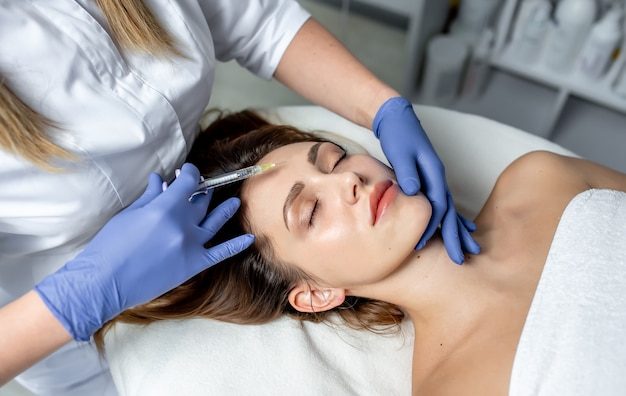
Many practitioners prefer Dysport for the forehead because its wider diffusion provides more even coverage across this larger area. For forehead lines, both products work well, but Dysport’s spread can mean fewer injection points for natural-looking results.
Which Is Better for Crow’s Feet?
Botox is commonly used for crow’s feet because precise placement is important around the eyes. However, experienced injectors use both products effectively in this area.
Which Is Better for Frown Lines (11s)?
Both are FDA-approved specifically for this area. Your injector’s experience and preference often determines the choice here. Our physicians at Mediversity are skilled with both formulations.
Can You Use Both in the Same Session?
Yes — some patients have both products used in different areas during the same treatment session. This is more nuanced and requires an experienced injector who is comfortable with both formulations.
How to Choose: Talk to Your Injector
The best choice depends on your specific anatomy, treatment areas, and goals. At Mediversity, our physicians evaluate each patient individually to recommend the product — and the dose — that will produce the most natural, effective results for your face.
Ready to book your Botox or Dysport consultation in Turnersville, NJ? Contact Mediversity today and our aesthetic team will guide you to the right choice.