
Mediversity Health · Hair Restoration

Hair Restoration in New Jersey

Non-Surgical Hair Loss Solutions for Men and Women

Noticing more hair in your brush, a widening part, a receding hairline, or thinning around the crown can be frustrating. Hair loss does not always have the same cause, so the right approach starts with understanding what is happening to your scalp and hair follicles.

Non-surgical hair restoration

PRP Platelet-rich plasma therapy
Medical Hair-loss management
Men & women Cause-first evaluation
2 NJ offices Turnersville & Salem County
Medical hair restoration consultation at Mediversity in New Jersey
Turnersville & Salem County, NJ Hair Restoration

A treatment plan built around the cause of your hair loss.

Non-Surgical Hair Loss Solutions for Men and Women

Mediversity Health offers medically supervised Hair Restoration care in New Jersey, including scalp and hair evaluation, PRP hair therapy, and medical hair-loss management when appropriate.

Our goal is to build a realistic treatment plan around the cause of your hair loss, your current hair density, and what you want to improve.

Mediversity serves patients through offices in Turnersville and Mannington Township in Salem County, New Jersey.

What Is Hair Restoration?

Hair restoration is a broad term for treatments designed to address hair loss, thinning, or reduced hair density. It can include medical treatment, regenerative procedures such as PRP, and surgical hair transplantation depending on the cause and extent of hair loss.

Not every person with thinning hair needs a transplant. In many cases, the first step is identifying the type of hair loss and deciding whether non-surgical treatment may be appropriate. The American Academy of Dermatology recommends determining the cause of hair loss before choosing treatment because different types of hair loss require different approaches.

At Mediversity, the current Hair Restoration service focuses on non-surgical hair-loss care, including PRP therapy, medical management, and scalp and hair analysis.

Hair Loss Can Have More Than One Cause

Hair thinning is not always the same condition. Common causes include:

  • Hereditary or androgenetic hair loss
  • Hormonal changes
  • Certain medical conditions
  • Medications
  • Nutritional issues
  • Shedding after childbirth, illness, surgery, or significant stress

Androgenetic Hair Loss

Androgenetic alopecia, also called male-pattern or female-pattern hair loss, usually develops gradually. Men may notice a receding hairline or thinning at the crown, while women commonly notice a widening part or more diffuse thinning.

Postpartum or Stress-Related Shedding

Some people experience increased shedding a few months after childbirth, a major illness, surgery, substantial weight loss, or a period of significant stress. This type of excessive shedding is often called telogen effluvium, and many people regain their normal fullness once the triggering event has passed.

Because different causes can look similar, an evaluation is important before assuming that all hair loss is genetic. When hair loss may be linked to a broader health issue, our primary care in New Jersey can help look at the bigger picture.

Hair Restoration Treatments at Mediversity

Mediversity’s Hair Restoration service includes PRP hair therapy, medical hair-loss management, and scalp and hair analysis.

PRP Hair Therapy

Platelet-rich plasma, or PRP, uses a small sample of your own blood. The blood is processed to concentrate platelets and plasma, which are then administered to areas of thinning hair.

PRP has been studied for androgenetic alopecia. Systematic reviews have found evidence of potential improvements in measures such as hair density, but the quality and consistency of the available evidence varies. PRP should therefore be discussed as one treatment option rather than a guaranteed solution for every type of hair loss.

Mediversity currently lists PRP Hair Therapy as part of its Hair Restoration service.

PRP hair restoration treatment for thinning hair at Mediversity

Medical Hair Loss Management

Depending on the cause of hair loss and your medical history, medical treatment may be appropriate.

Mediversity currently lists prescription hair-loss treatments including minoxidil and finasteride when appropriate. The suitability of any medication depends on factors such as sex, age, medical history, other medications, and the type of hair loss being treated.

For example, topical minoxidil is an established treatment option for certain forms of pattern hair loss. Finasteride is an FDA-approved prescription treatment for male pattern hair loss. Both require appropriate ongoing use to maintain benefits, and prescription treatment should be discussed with a qualified medical professional.

Minoxidil

Topical treatment option for certain forms of pattern hair loss.

Finasteride

FDA-approved prescription treatment for male pattern hair loss.

Both require ongoing use to maintain benefits.

Scalp and Hair Analysis

Before deciding what treatment makes sense, your provider can review your hair-loss history, pattern of thinning, medical history, and treatment goals.

A proper evaluation matters because hair loss can have several possible causes, and treatment that is appropriate for hereditary hair loss may not be appropriate for another condition. The AAD notes that evaluation may include scalp examination and, when medically indicated, blood testing or other diagnostic work.

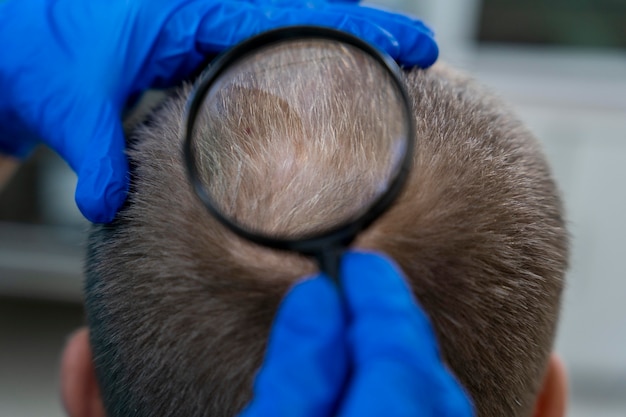
Scalp and hair analysis for thinning at the crown

What About Exosome-Based Hair Therapies?

Exosome-based approaches are being studied as an emerging area of hair-regeneration research. Early clinical studies have reported improvements in some hair measurements, but researchers continue to note limitations such as small study populations, different formulations, varying protocols, and limited high-quality evidence.

Any exosome-based service offered by a medical practice should therefore be discussed carefully, including the specific product, source, protocol, evidence, and regulatory status.

Regulatory status

The FDA states that there are currently no FDA-approved exosome products in the United States and advises patients to be cautious about claims surrounding regenerative medicine products.

Hair Restoration for Men

For male pattern hair loss, treatment may include medical management and, for appropriate patients, procedures such as PRP. The AAD notes that treatment decisions should be based on the type and extent of hair loss, and PRP may require maintenance treatments to maintain results.

Men in South Jersey can be seen for this care at Mediversity’s Turnersville and Salem-area locations.

Men may experience:

  • Receding hairlines
  • Thinning at the temples
  • Crown thinning
  • Male-pattern baldness
  • Progressive loss of hair density

Hair Restoration for Women

Female-pattern hair loss commonly appears as a widening part and gradual thinning. The American Academy of Dermatology recommends evaluation to confirm the diagnosis because several different conditions can produce similar symptoms.

Some women may also be candidates for hair transplantation, but surgery is not automatically the right first step. Candidacy depends on the diagnosis, pattern of hair loss, and availability of suitable donor hair.

For women noticing thinning or shedding, the most useful first step is a medical evaluation rather than choosing a treatment based only on the amount of visible shedding.

Woman discussing hair thinning and restoration options

Hair loss in women can be caused by:

  • Female-pattern hair loss
  • Postpartum shedding
  • Hormonal changes
  • Stress
  • Nutritional issues
  • Medications
  • Other medical conditions

Can Hair Loss Be Reversed?

Sometimes hair can grow back, but the answer depends on why the hair was lost.

Temporary Shedding

Shedding after childbirth, illness, surgery, or major stress may improve after the triggering event resolves.

Pattern Hair Loss

Pattern hair loss often requires ongoing treatment to slow progression and preserve or improve density.

There is no single treatment that works for every person with hair loss. The AAD emphasizes that treatment should follow an appropriate diagnosis — which is why a hair specialist for alopecia should focus first on identifying the type of hair loss rather than promising a universal baldness cure.

Hair Restoration vs. Hair Transplant

The terms are sometimes used interchangeably online, but they do not mean the same thing.

A hair transplant is a surgical procedure that moves hair follicles from a donor area to areas affected by hair loss. Modern transplantation techniques include FUE, or follicular unit extraction. The AAD notes that modern hair transplantation can provide permanent results for appropriate candidates.

Hair plugs, FUE hair implants, hair grafts, and hairline transplant costs all relate to surgical transplantation rather than non-surgical treatment. The same is true of transplant before-and-after results, transplants for women, and beard hair transplants — these should be evaluated separately from a non-surgical hair-loss treatment plan.

Non-surgical restoration

  • PRP therapy
  • Medical hair-loss management
  • Scalp and hair evaluation
  • Offered at Mediversity

Surgical transplant

  • Moves follicles from a donor area
  • Techniques include FUE
  • Priced by technique and grafts
  • Not part of Mediversity’s current service

What to Expect at a Hair Restoration Consultation

Your consultation is the starting point for deciding what approach makes sense.

01

1. Discuss Your Hair Loss

You will discuss when the thinning or shedding began, where you are noticing it, whether it is progressing, and any relevant medical or lifestyle factors.

02

2. Review Your Medical History

Certain medications, hormonal changes, medical conditions, nutritional issues, and major stressors can affect hair growth or shedding.

03

3. Evaluate Your Scalp and Hair

The pattern and distribution of hair loss can provide important clues about the underlying cause. Additional testing may be considered when medically appropriate.

04

4. Discuss Treatment Options

Depending on the evaluation, your plan may involve medical hair-loss management, PRP therapy, observation and follow-up, or another appropriate next step.

05

5. Set Realistic Expectations

Hair grows gradually, and treatment outcomes vary from person to person. The goal is to choose an approach that matches the cause of the hair loss rather than promising a fixed result or timeline.

How Much Does Hair Restoration Cost?

There is no single hair restoration price that applies to every patient.

Cost can vary depending on the diagnosis, treatment selected, number of sessions, medications, and overall treatment plan. Pricing depends on treatment goals, complexity, and session count, with treatment recommendations discussed during consultation.

Hair transplant expenses are different because surgical transplantation is generally priced according to factors such as technique and graft requirements. That pricing should not be confused with the cost of non-surgical hair restoration.

Does Insurance Cover Hair Restoration?

Insurance coverage depends on the treatment and the specific health plan. Coverage varies by service type and plan details, so we recommend confirming benefits and out-of-pocket expectations before treatment.

Cosmetic and elective hair-restoration procedures may be treated differently from medical evaluation or treatment of an underlying condition, so coverage should be verified for the specific service you are considering.

Cost can depend on:

  • Diagnosis
  • Treatment selected
  • Number of sessions
  • Medications
  • Overall treatment plan

For an individualized estimate, schedule a consultation with Mediversity.

Hair Restoration in Turnersville and Salem, NJ

Mediversity has two New Jersey office locations that provide local access to the team for patients across South Jersey. The practice serves patients across New Jersey and also offers telehealth for appropriate services.

Why Start With an Evaluation?

Hair loss can be genetic, temporary, hormonal, medical, medication-related, or caused by other factors. Treating the visible thinning without understanding the cause can lead to the wrong treatment choice.

A medical evaluation gives you a clearer starting point and helps determine whether non-surgical hair restoration, medication, PRP, another approach, or further evaluation is appropriate.

Mediversity’s medical team is led by Dr. Ahsan Abdulghani, M.D., the practice’s founder and Medical Director. Learn more about Mediversity Health.

Cause first, treatment second. The right plan depends on why your hair is thinning, not only on how much hair you are losing.

Ready to Discuss Your Hair Loss?

You do not have to decide on a treatment before your consultation. Start by discussing your hair-loss pattern, goals, medical history, and available treatment options with the Mediversity team.

Mediversity Health provides Hair Restoration care in Turnersville and Mannington Township / Salem County, New Jersey. Call (856) 740-9777 or email info@mediversity.com.

Frequently Asked Questions

Answers about regrowth, prevention, vitamins, results timelines, and how transplants differ from non-surgical care.

Yes. Dermatologists are specialists in diagnosing and treating hair loss and can help distinguish pattern hair loss from other conditions that may require different treatment.

Sources

This page is for general information and does not replace an individual medical evaluation. Individual results vary.

Scroll to Top