In this article
Hair Loss in Women: A More Common Problem Than You Think
An estimated 50% of women will experience noticeable hair loss at some point in their lives, yet female hair loss remains significantly under-discussed compared to male pattern baldness. At Mediversity’s hair restoration center in Turnersville, NJ, we help women at every stage of hair loss — from early thinning to more advanced loss — find effective, personalized treatment solutions.
Why Women Lose Hair: The Main Causes
1. Female Pattern Hair Loss (FPHL / Androgenetic Alopecia)
The most common form of hair loss in women. Unlike men who typically lose hair from the temples and crown, women usually experience diffuse thinning across the top of the scalp — the part gets wider, and the overall density decreases. It is caused by a combination of genetic predisposition and androgen sensitivity, though women’s testosterone levels are much lower than men’s.
2. Hormonal Changes
Hormones have a profound effect on hair cycles. Hair loss can be triggered or worsened by:
- Pregnancy and postpartum shedding (telogen effluvium)
- Menopause and perimenopause (declining estrogen levels)
- Starting or stopping birth control pills
- Thyroid disorders (both hypo- and hyperthyroidism)
- PCOS (polycystic ovary syndrome) — elevated androgens accelerate hair follicle miniaturization
3. Nutritional Deficiencies
The hair follicle is one of the most metabolically active structures in the body and is highly sensitive to nutritional status:
- Iron deficiency — one of the most common and correctable causes of hair loss in women; ferritin should be above 70 ng/mL for optimal hair growth
- Vitamin D deficiency — plays a key role in follicle cycling
- B12 deficiency
- Protein deficiency — crash dieting or very low protein intake disrupts the hair growth cycle
- Zinc deficiency
4. Telogen Effluvium
A reactive form of hair shedding triggered by significant physiological stress: surgery, severe illness, major emotional stress, rapid weight loss, crash dieting, or giving birth. Hair follicles prematurely shift to the resting (telogen) phase, and 2–3 months later, dramatic shedding occurs. The good news: this type of hair loss is usually temporary if the trigger is addressed.
5. Traction Alopecia
Caused by hairstyles that pull tightly on the scalp — tight braids, ponytails, extensions, or weaves. This type of hair loss begins at the hairline and temples and can become permanent if the tension is not relieved early enough.
6. Alopecia Areata
An autoimmune condition where the immune system attacks hair follicles, causing patchy or widespread hair loss. This is distinct from pattern hair loss and requires a different treatment approach.
Treatments That Actually Work for Female Hair Loss
Minoxidil (Topical or Oral)
The most well-studied topical treatment for female pattern hair loss. Available over the counter (2% women’s formula) or by prescription (5% solution or oral minoxidil at low doses). Oral minoxidil has shown impressive results in multiple studies and may be more effective for some women than topical application.
PRP Therapy
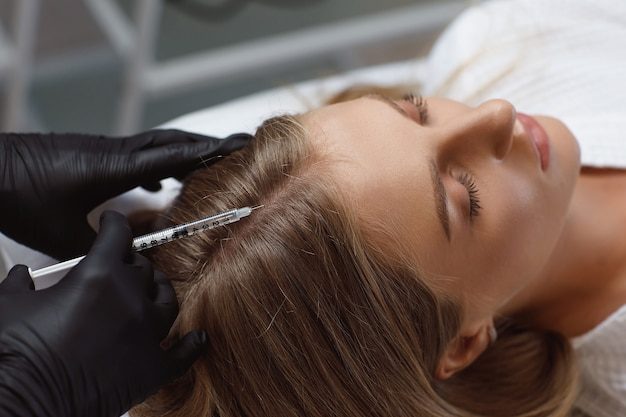
Platelet-rich plasma injections stimulate follicle activity and have strong clinical evidence for female pattern hair loss. Multiple sessions are needed, and results build over months.
Hormonal Treatment
For women with PCOS or elevated androgens, medications like spironolactone can reduce hair loss by blocking androgen receptors. This is a prescription medication requiring physician supervision.
Nutritional Correction
Correcting iron deficiency, vitamin D, or B12 deficiencies through targeted supplementation can produce significant improvement in hair growth when deficiency is the primary driver.
Scalp Microneedling
Microneedling the scalp creates micro-trauma that stimulates collagen and growth factors, enhancing follicle function. Often combined with PRP or topical minoxidil for enhanced results.
Getting a Proper Diagnosis
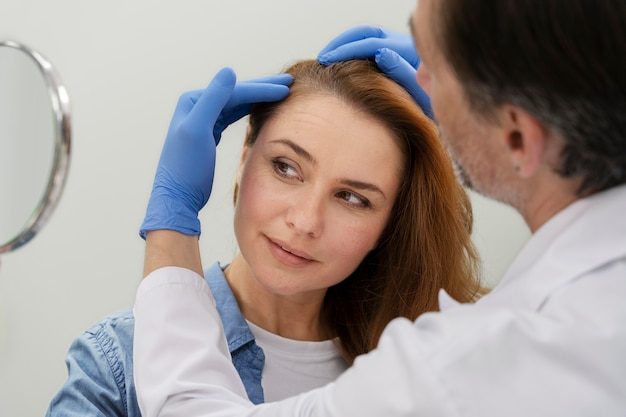
The most important step is getting a thorough evaluation before starting treatment. At Mediversity, our physicians conduct a comprehensive blood panel, scalp analysis, and medical history review to identify the type and cause of your hair loss before recommending a treatment approach.
If you are in the South Jersey area and experiencing hair thinning or loss, do not wait. Contact Mediversity today to schedule your hair loss evaluation at our Turnersville location.